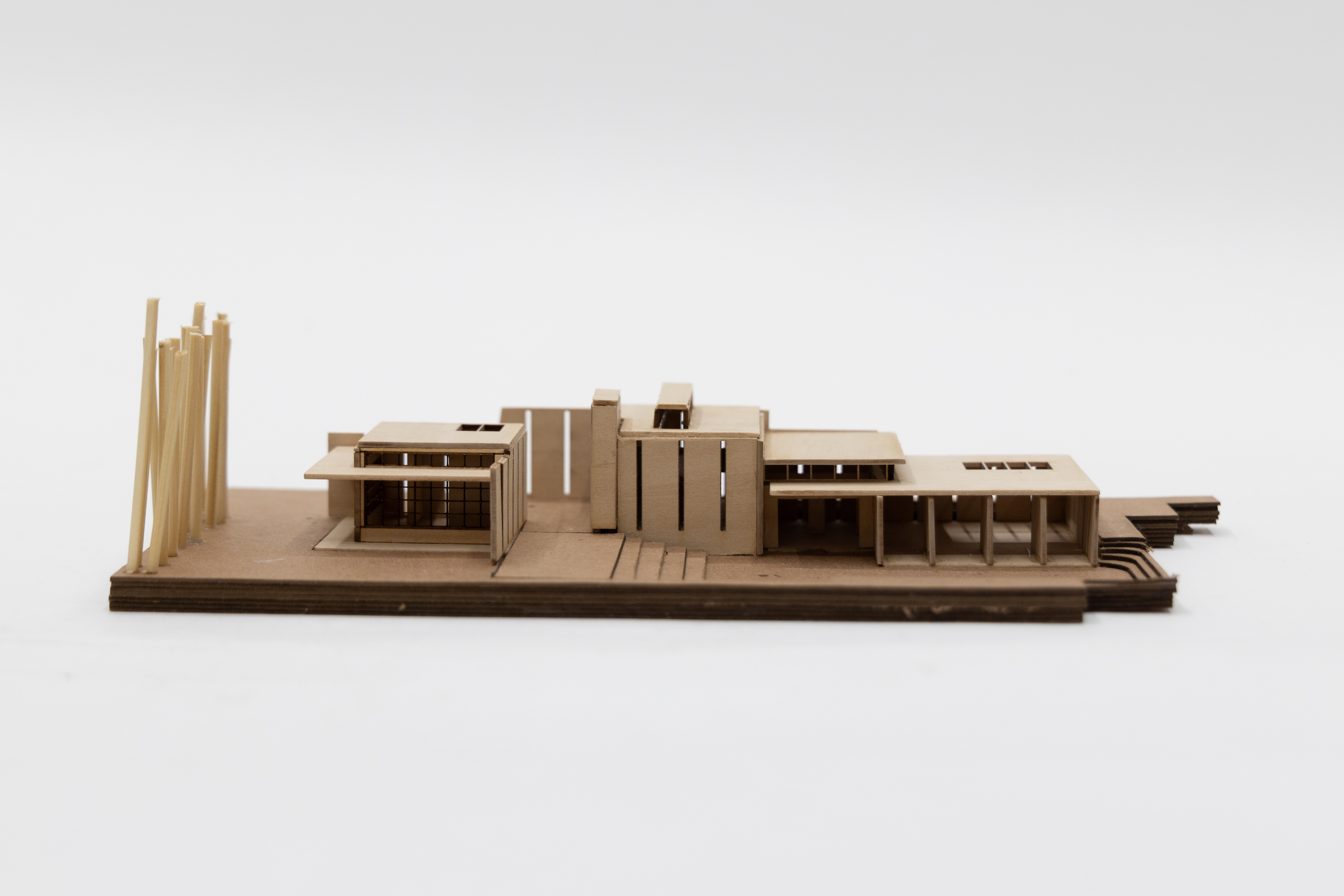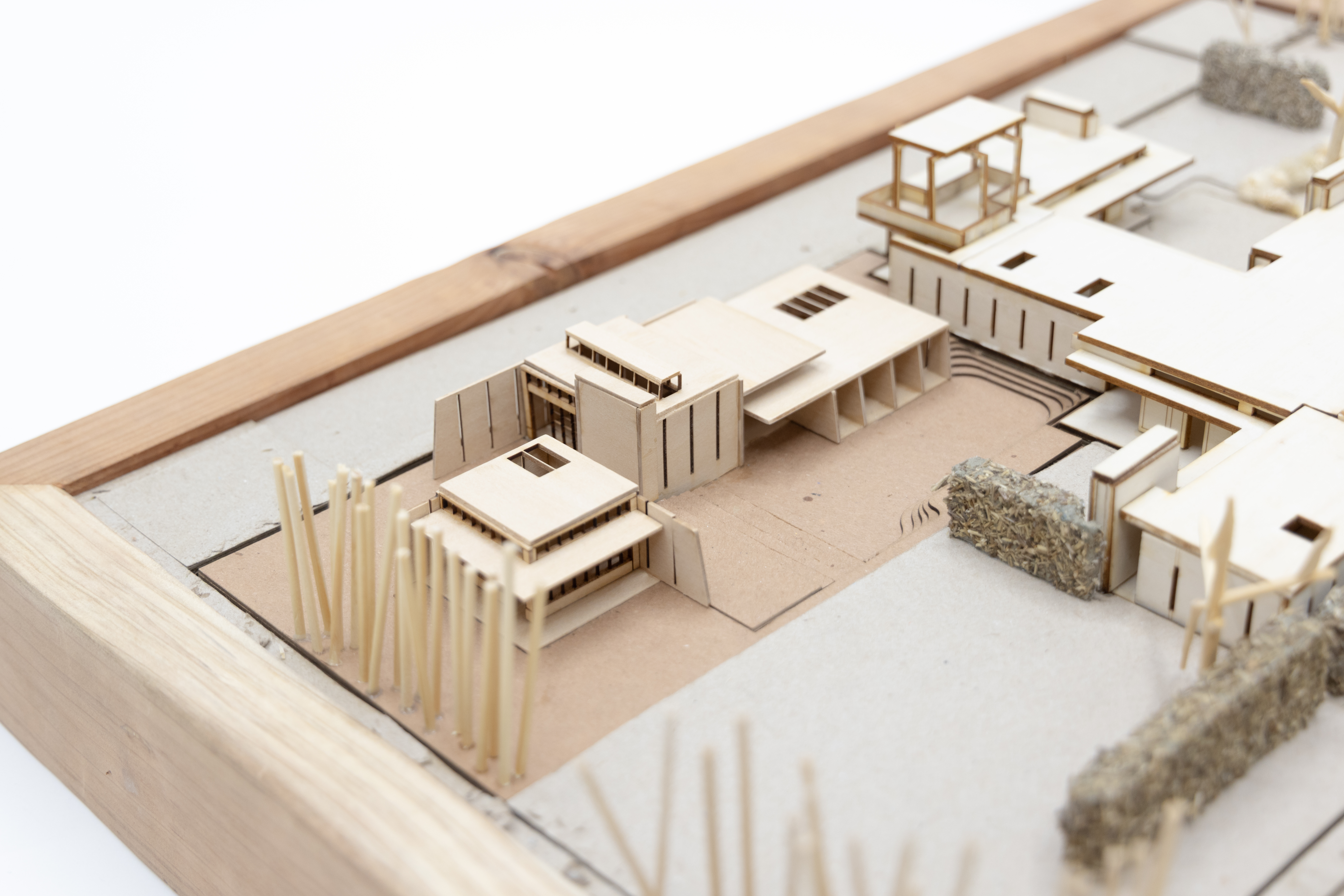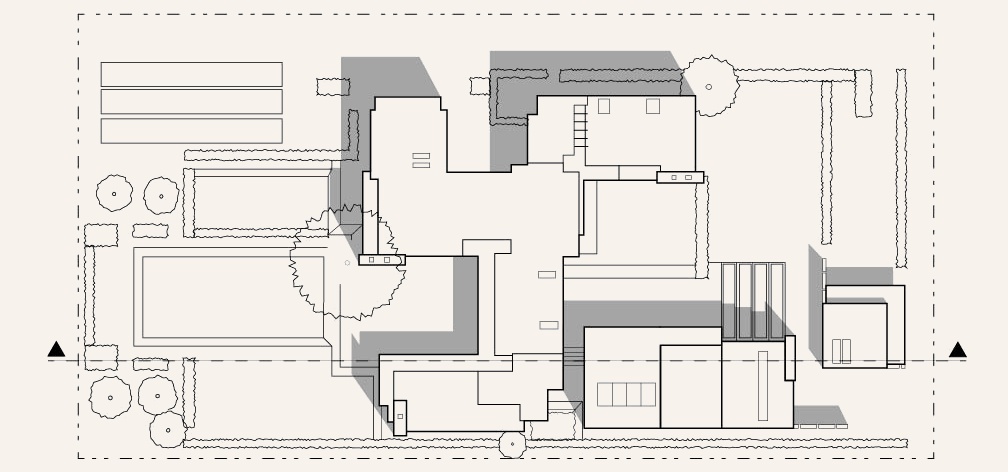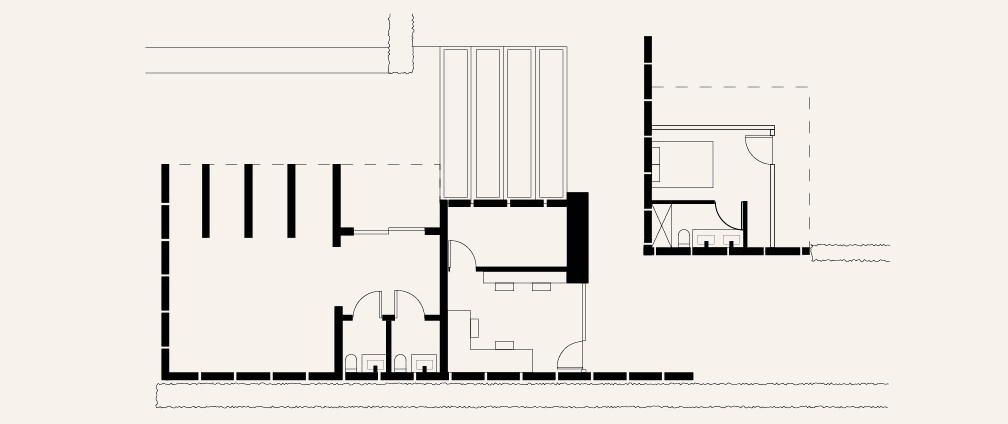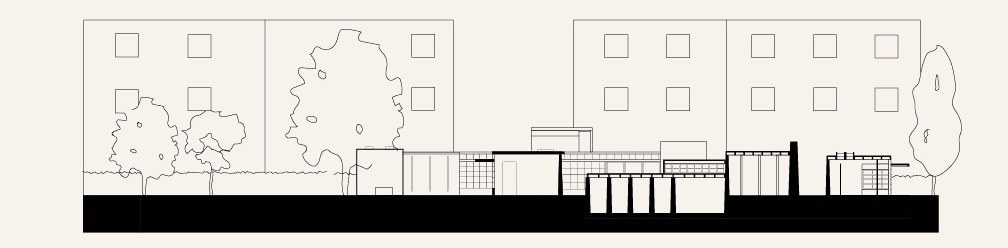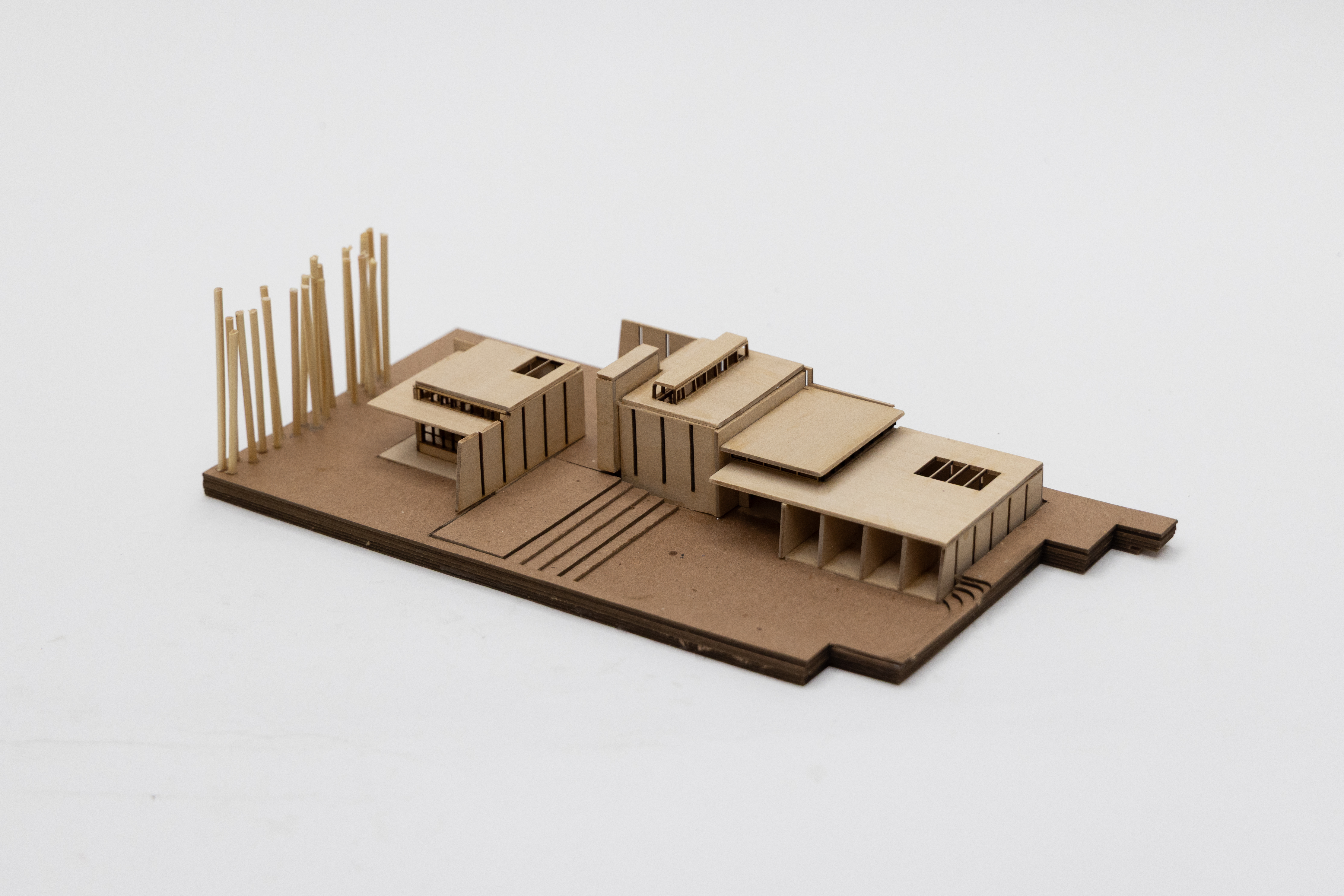
The Schindler Chace House (1922), Rudolph M. Schindler's pioneering experiment in modern domestic living, remains a landmark of spatial fluidity, material honesty, and climate-responsive design. Its tilt-up concrete walls, sliding panels, and indoor–outdoor courts dissolve the boundaries of traditional architecture, shaping an environment where structure, landscape, and daily life interweave. The proposed addition builds on this ethos by introducing contemporary materials and forms that converse with, rather than mimic, the original. Rammed earth walls ground the new volume in the site's topography, their stratified texture echoing Schindler's raw material palette, while charred Japanese wood introduces a quiet contrast of light-absorbing surfaces.
Spatially, the addition employs terracing, changes in elevation, and gently sloping walls to create a sense of movement and subtle spatial hierarchy without compromising openness. Clerestory windows continue Schindler's focus on natural light, washing the rammed earth with shifting illumination and reinforcing a passive, climate-aware sensibility. As a whole, the addition operates as a modern counterpart to the historic house—respectful in spirit, experimental in form, and committed to the same interplay of material, light, and landscape that made the original so radical.
In addition to the design proposal, I was appointed by studio faculty to serve as project manager for the reconstruction of the site model. Leading a team of approximately 30 students, I coordinated workflow, delegated tasks, and managed the repair and completion of the model to ensure it was presentation-ready by the final review.